The problem
A clear aligner company was losing potential customers during sign-up. Users struggled to find key information (cost, treatment duration, expected results) and often didn't show up for their first appointment. Once in treatment, patients lacked motivation to wear aligners the required 22 hours daily, delaying results.
Research and speaking to patients
I led user research to understand patient pain points:
- Competitive analysis of Byte, SmileDirectClub, and Invisalign apps
- Survey with 50 clear aligner users from online forums
- 8 user interviews via video call
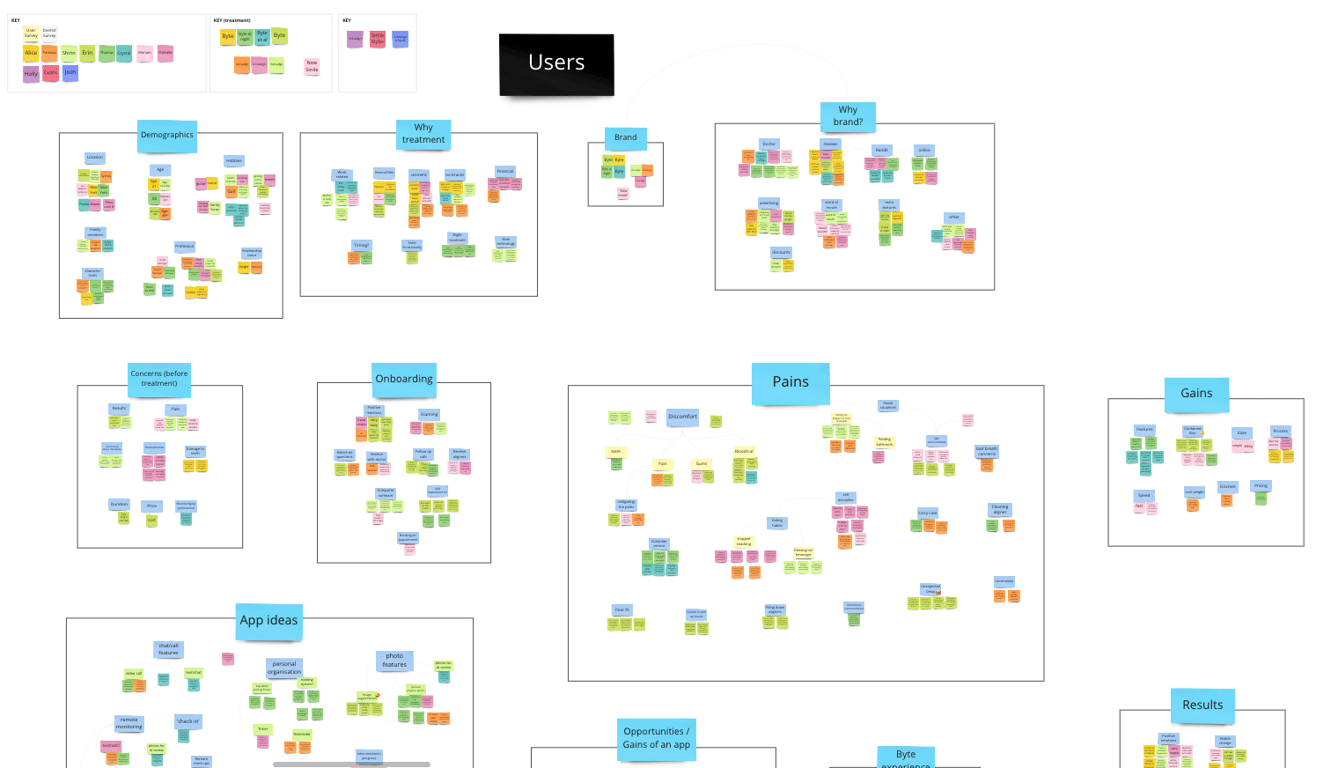
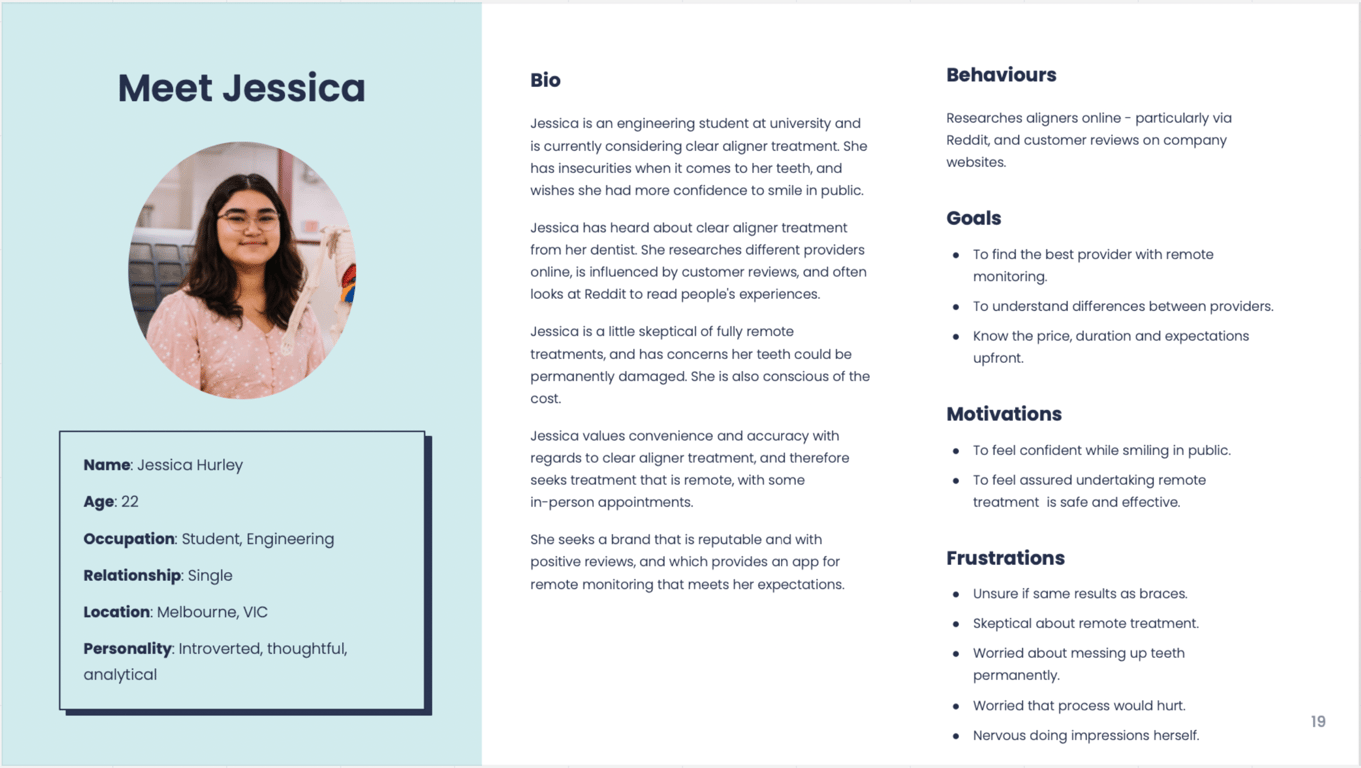
Core concerns: motivation, self-discipline and trust
I synthesised the data from our research in order to define the problem.
Key findings:
- 90% desired a visual motivator (such as a before and after stimulation) to get them to start treatment.
- Users valued flexible remote and in-person appointment options.
- Self-discipline to wear aligners 22 hours/day was the biggest struggle.
- Clear communication with dentists built trust and treatment confidence.
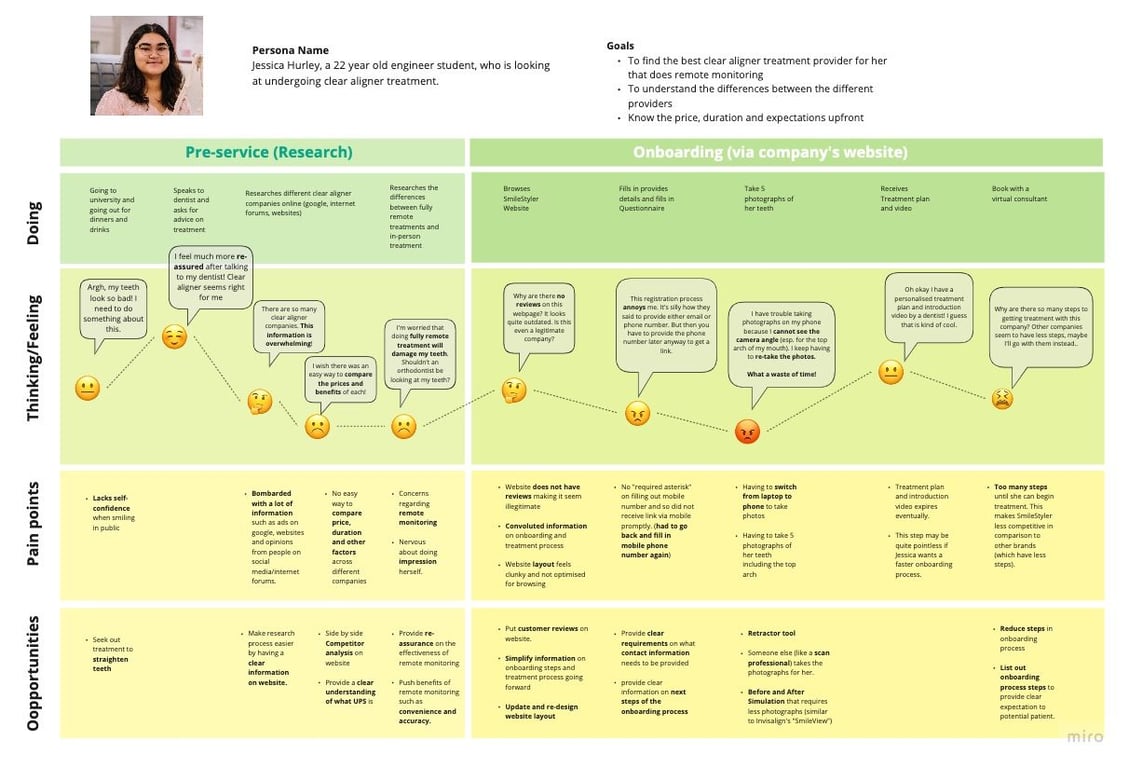
Mapping a patient’s painpoints
I created journey maps to identify where we could reduce friction.
This helped us to brainstorm opportunities during the sign-up and treatment process.
This helped us to brainstorm opportunities during the sign-up and treatment process.
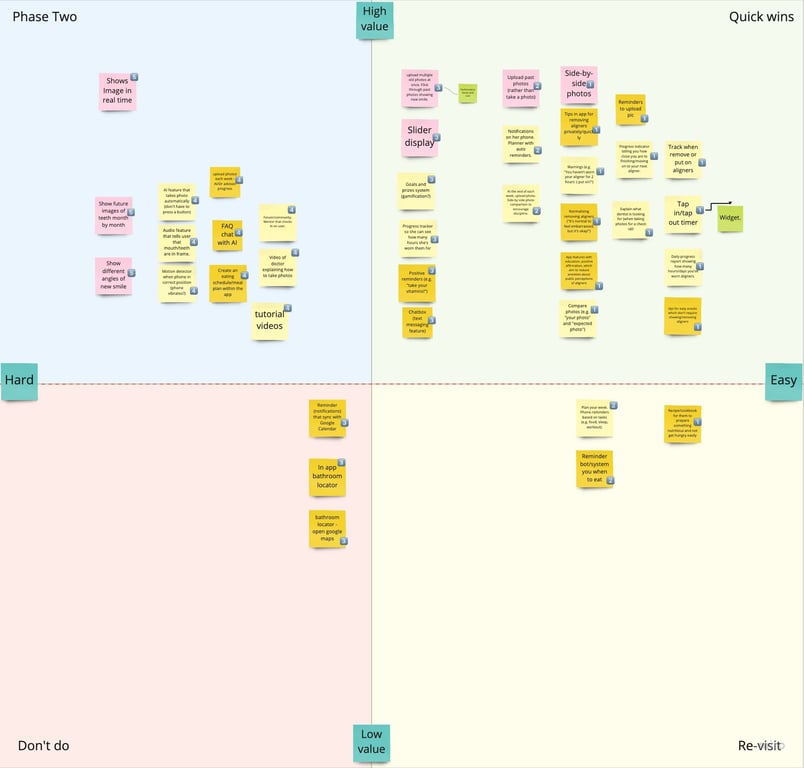
Ideating and designing a better treatment experience
I facilitated brainstorming sessions with engineers, designers, and marketing. We prioritised features using an MVP matrix based on user value and technical feasibility.
I also built information architecture, user flows, and progressed from low-fidelity wireframes to high-fidelity prototypes in Figma. I worked closely with a UI designer to apply the company's branding.
Solution: the clear aligner patient app
I designed an app with four core features:
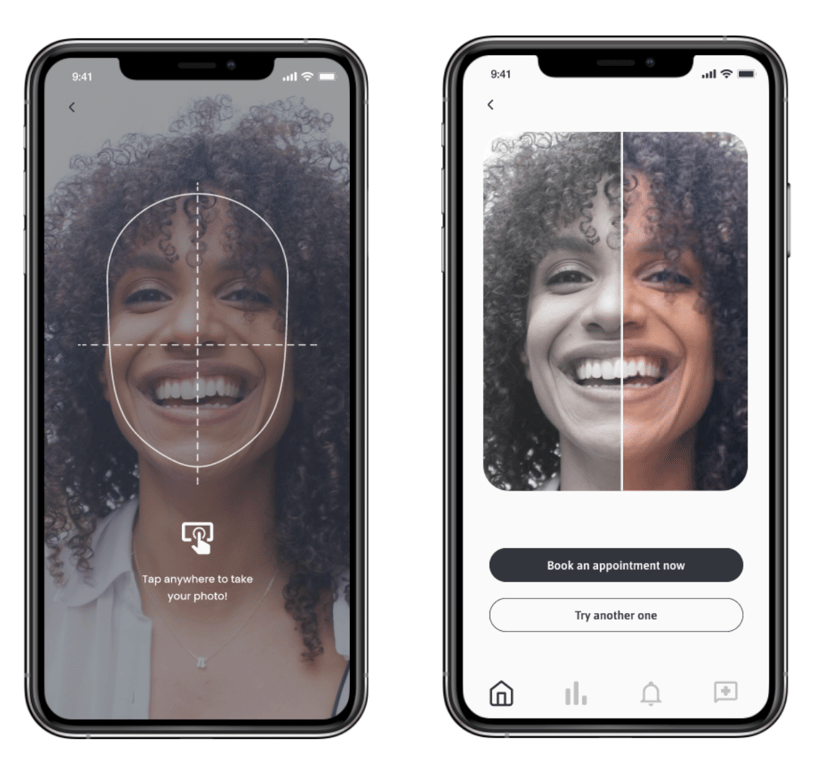
Before and after simulation to motivate sign-up
Users photograph their teeth and receive an AI-generated simulation of post-treatment results. This directly addresses the top user need and drives appointment bookings.
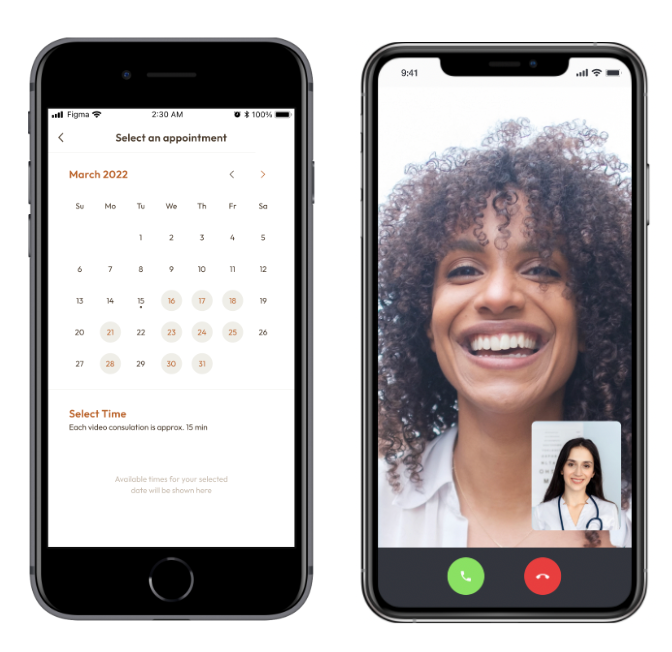
Easy booking system for virtual consultations
After viewing their simulation, users can immediately book a free virtual consultation to get answers about cost and duration—removing the main barriers to sign-up.
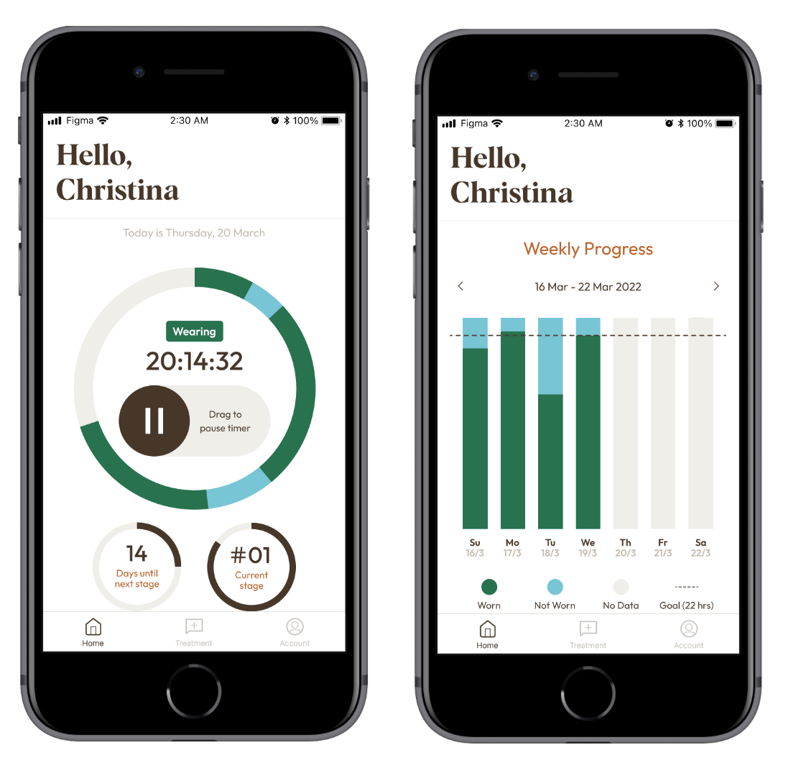
Daily tracker to encourage aligner wear
A timer tracks how long users wear their aligners each day with a 22-hour goal. Weekly progress views and stage countdowns motivate consistent wear.
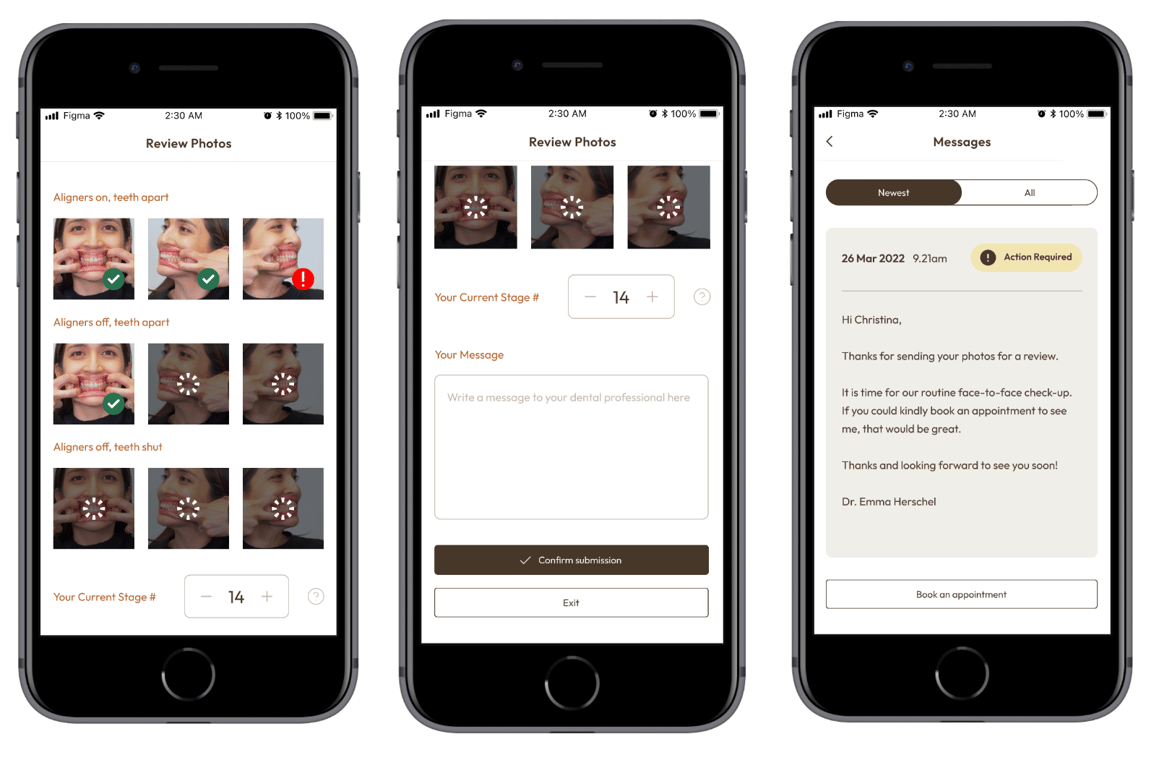
Direct communication with dentist
Users can upload 9 photos of their teeth and message their dentist with concerns. Dentists can respond and offer appointment booking, building the trust users need.
Impact
- Delivered all project components on time and within scope.
- Client feedback was extremely positive—they're excited to launch the app in 2023.
- Designed handover documentation with annotations that helped engineers build accurately.
- Due to time constraints, I only conducted survey-based usability testing with the Figma prototype. More in-depth moderated testing would have uncovered additional refinements before handoff.
 Made with Bullet